The Art of Seeing / Art & Visual Culture
The Art of Seeing
Cousin Greg
As far back as I can remember, I have loved art. One of my earliest memories is a mural my cousin painted on his bedroom wall. It was colorful and crowded with images and patterns, but I think what captivated me most was the wall itself as a canvas. In elementary school, most of the art I made fit on an 8-by-10 sheet of paper. His work stretched across a room. The scale made me stop and look.
Looking back, I wonder whether that mural had something to do with my later interest in graffiti and street art. The colors, the size, the freedom of painting directly on a wall—those were the same things that drew me in. My cousin’s artwork was not centered on letters or names, but he often painted the female figure, which I would later notice in some of the graffiti and street art that caught my eye.
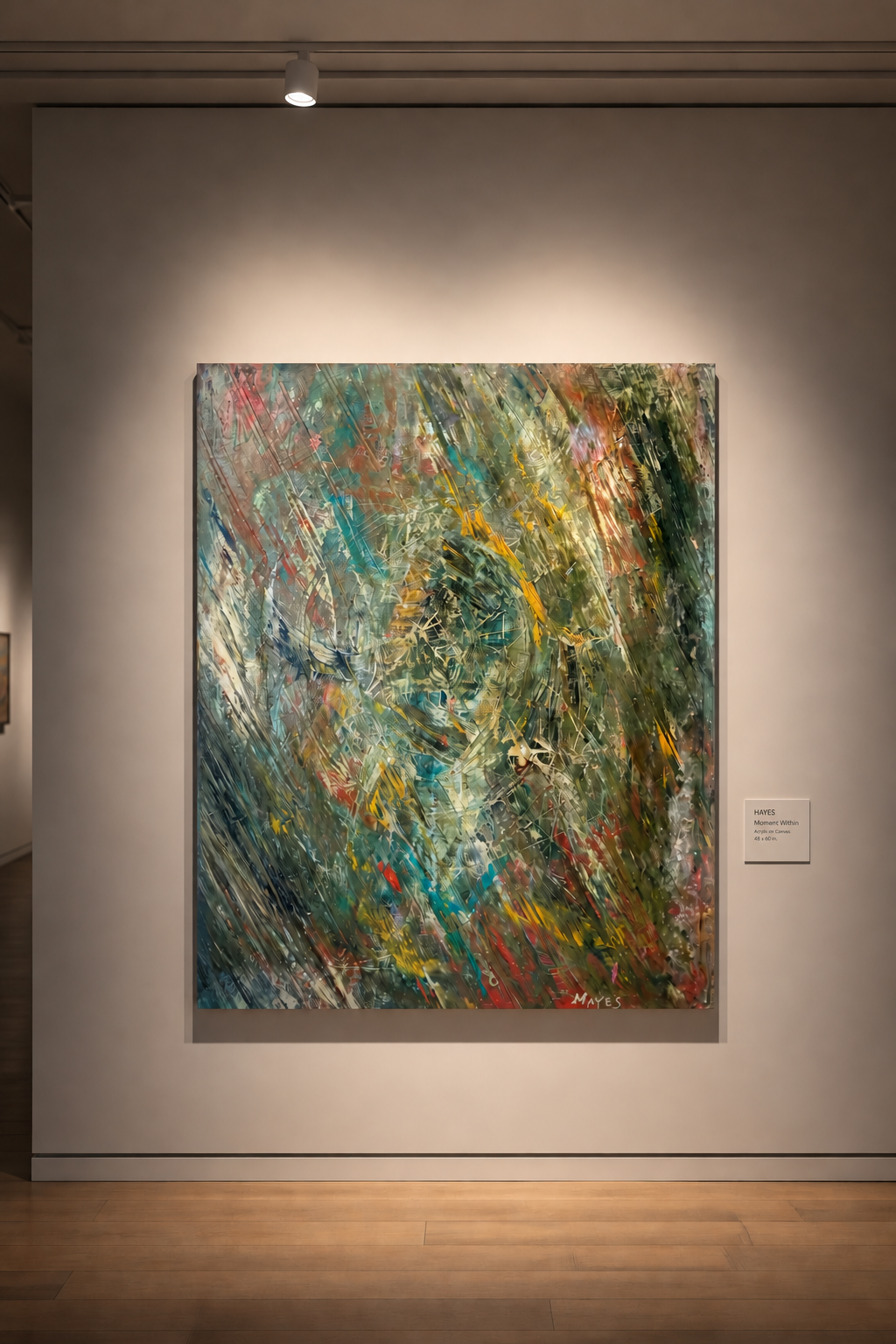
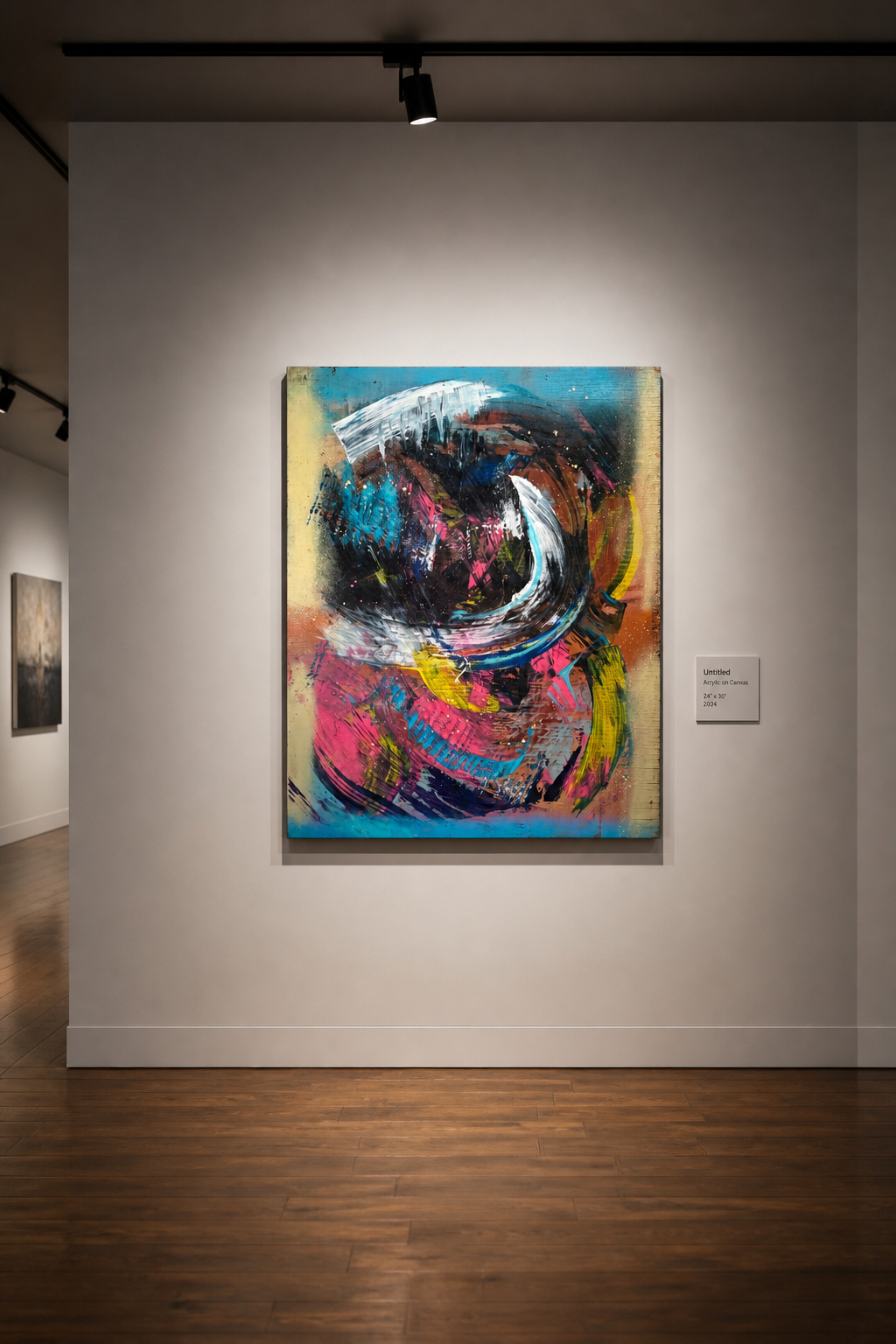
I also grew up as graffiti was becoming a visible part of hip-hop culture. I imagine there is something special about encountering an art form while its style is still taking shape, much as someone might have experienced the early days of pointillism or surrealism. At the time, I was not thinking about art movements or their place in history. I was taking in the colors, the music, the dance, and all the other ways people were expressing themselves.
By my teenage years, I was drawn to all of it. The fashion, music, dance, and visual art spoke to one another. Together, they made hip-hop a culture, and I wanted to take in every part of it. I can understand why some people from an older generation did not see the appeal. I imagine rock and roll met with some of the same resistance when it arrived. A new generation’s music, clothes, or art can look strange to the people who came before it. I have to admit that I sometimes catch myself reacting that way to what a younger generation creates. It makes me think of the questions I raised in When the Underground Goes Mainstream. But that is another story. I want to return to what first held my eye: graffiti.
During my mid-teenage years, it felt as though the art form was growing right alongside me. I spent many summers with my aunt and cousins in Southwest Philadelphia. I could have gotten there another way, but I often chose public transportation because it gave me a chance to see what had appeared on buildings and rooftops along the way. I looked for new names, changes in style, and signs that a writer I had noticed before was getting better. Some colors seemed to blend into one another like a natural sunset. Other pieces stood out because of the way their letters took shape. I wanted to know who was new, who was improving, and who was on top.
I came to look for two forms in particular: pieces or burners, and tags. The pieces could be huge and full of color, sometimes accompanied by a character or an entire scene. In the most intricate ones, letters interlocked or wove through each other until reading the name became almost like solving a puzzle. Others used straightforward lettering—large, almost like typewriter letters—that spelled out the name clearly. Some used many colors; others made an impression with only one or two. Either way, I found them exciting.
Tags were quicker and closer to handwriting, but that did not mean they lacked style. I could begin to recognize a writer by the way a name was formed. There was also recognition to be earned—“rec”—from how often a name appeared and how much ground it covered. A tag I had seen in one place might turn up somewhere else on my ride, and I would notice.
Then there was the question I could never quite get past: How did they get up there? Some work appeared on rooftops so high or in places so restricted that I could hardly imagine someone reaching them, let alone staying long enough to paint. I almost never saw the artists at work. I saw what they left behind.
As I got older, I understood more of what those locations could mean for the people making the art. Painting on a wall without permission could bring legal consequences, including arrest. Reaching a high rooftop or working near rail traffic could carry a far more immediate danger. A fall or one wrong move could be devastating. From my seat on public transportation, I could admire the finished work without facing any of the risks involved in making it.1
That realization did not take away my fascination. It made me look longer. Behind the color and the lettering was someone who had imagined a piece, found a way to put it into the world, and accepted consequences I had not considered when I first looked up and saw it.
Before I fully understood those risks, I had already decided that I wanted to try the art form for myself. Early in my teens, I began studying the handstyles I saw in tags and the elaborate lettering of burners. I cannot quite remember the name I chose to start with, though I am fairly sure it was my first name. I practiced and practiced until it stopped feeling like practice. Drawing those letters became something I did whenever I could. At times, I was so dialed in that I lost track of everything around me. I did not have a name for it then, but I now recognize that feeling as a kind of flow state.
In art class, we were sometimes given free time to experiment with whatever we wanted. I chose burners. My classmates were intrigued and excited to see what I would finish. Some asked me to create one using their names; other times, I would draw a name and give the piece away. Seeing their reactions made me want to keep improving.
My art teacher saw it differently. I can still hear him asking, “Why are you wasting your time on that crap?” I was offended and angry. I remember looking at him and answering, “Because I like it. Besides, it’s free time, isn’t it?” Years later, in other art classes, his words would still come back to me. To him, those letters may have looked like a waste of time. To me, they were an opportunity to work with color, shape, movement, and composition. His comment stayed with me, but it did not stop me. I kept working, and I became quite good at both hand styles and burners.
Around that time, a close friend of mine knew a couple of older, more experienced writers in Philadelphia. They would lend him their black books, and he would bring them for me to see. Those pages were filled with burners and hand styles that, in my opinion, deserved to be framed and hung on studio walls. My friend was a writer too, so I asked him how they achieved those beautiful color blends—the subtle shift from something vivid to something almost pale. He told me what markers they used, and I immediately went looking for them.
I found the markers at a local art supply store. After that, I was all in. It took time to get the blending right, but eventually I could see the colors changing on the page the way I had imagined. I could not have been prouder. My work was nowhere near the level of the writers whose black books had inspired me, but I was getting better. Over time, I felt that I had begun to close some of the distance.
Another friend or two became writers as well. We would get together to draw, trade ideas, or show one another something we were especially proud of.
Barbershop Talk
One of those summers, when I was in my mid-teenage years while staying with my aunt, I went to Braxton’s Barbershop in Southwest Philadelphia for a haircut. It was a well-established neighborhood shop with maybe three chairs. If you know barbershop talk, you know how a room can come alive when the chairs are full and everyone has something to say. If you have never experienced it, I am sorry—you have missed one of the most animated conversations anywhere. It is right up there with car-wash talk, employees only.
The shop was packed that Saturday. When it was my turn, I took Mr. Braxton’s chair. “Good morning, young man. What are we doing today?” he asked. I told him to fade the sides and trim the top. He said he would, and then the conversation took a turn that had my full attention.
With real frustration in his voice, Mr. Braxton said, “I wish these lil nigg*s would stop writing all over the walls around here.” For a moment, I understood his anger about the writing. This was his business, his brick wall, and he had not invited anyone to put a name on it. But his words also told me whom he assumed was responsible, and I thought I knew something the room did not. “Mr. Braxton,” I said, “the guys writing around here and on your wall are white.”
The clippers stopped buzzing. Mr. Braxton called out to the shop: “Hey, y’all, listen to this. Tell them what you just told me, son.” Suddenly the whole room was waiting for me. I felt nervous, but I knew the names I had seen. I said that much of the writing around that intersection had been done by white writers.
There was a beat of silence, followed by an eruption of laughter. One man nearly spit out his soda. I was embarrassed, mostly because they were laughing as though I had no idea what I was talking about. One of the men told me, in effect, that no white boys were coming into that neighborhood to spray-paint anybody’s wall. The room seemed to agree.
I tried to make my case. I named Credit, Mr. Blint, and Suroc. As I knew them at the time, Credit and Mr. Blint were XTC affiliates, while Suroc was affiliated with ICY, Inner City Youth. I told them that Credit dotted the i in his signature with a Star of David, as it was a nod to his religion and him being of the Jewish faith. I also mentioned that he lived in the same township as I did. To me, these details made it obvious that a name on a wall did not tell you a writer’s race. To Mr. Braxton, they did not prove a thing.
He waved off my explanation. He did not care what kind of star I had seen, he said; if Credit really lived near me, I should bring him to the shop so Mr. Braxton could “whip his lil ass.” I was frustrated that I could not convince anyone, but I could not help laughing at how ready Mr. Braxton was to confront the person writing on his wall.
The conversation stayed with me. The men in the shop were certain they knew who was writing on those walls. I was certain they had overlooked the writers I knew. Years later, I can also see the limit of my own perspective: I had never considered that some of the writers might be women.2
I continued making burners into adulthood, though work, other responsibilities, and eventually family life took more of the time I once spent writing. I never stopped completely, but as I write this, it has been several years since I last opened a black book to create a piece.
Female Finesse
For a long time, it simply had not crossed my mind. I cannot tell you exactly when that changed; it may have been in the 1990s, or even the early 2000s. I began noticing a tag that read KARMA. The handstyle was so clean and stylish that it seemed almost magical to me. Then I saw it again, this time as KWEEN KARMA. “Oh, shit,” I remember thinking. A female writer—and that handstyle was ridiculous. Dope.
Later, I came across a photo on social media showing KWEEN KARMA’s hand as she tagged a black book, her nails done like a modern-day hip-hop artist’s. She was affiliated with KIW, Klub International Wallwriters. I had thought I knew the scene, and here was proof of how much I still had to learn. I can only imagine what would have happened at Braxton’s if I had suggested that the writer behind a tag could be a white girl. I might have been escorted out before Mr. Braxton finished my fade. That is a joke about the room’s assumptions, not a claim about KWEEN KARMA’s identity or who wrote on his wall.
To me, Mr. Braxton’s certainty and my own blind spot are part of a larger story. Graffiti writers have never fit a single racial or gender profile. The work drew people with different backgrounds into a shared language of names, lines, and style. Over time, graffiti also traveled far beyond the walls and train cars where I first encountered it. It began appearing in galleries, advertising, fashion, and brand campaigns. Hip-hop culture, once treated as something outside the mainstream, became one of the forces shaping it. I have mixed feelings about the culture vultures who profit from a look without honoring the people who built it, but I cannot deny the reach of what those early writers helped create.
I still love seeing a burner light up whatever canvas an artist has chosen. The styles have continued to advance in ways I can hardly put into words. After all these years, I still find myself stopping to look.
My own route into the art form was through Philadelphia. I cannot end this story, though, without honoring New York’s writers and the subway cars they turned into moving canvases. To my eye, New York gave the burner a scale and reach that changed what people imagined graffiti could be. Philadelphia gave the handstyle its own unmistakable rhythm. Each city contributed something I still recognize when I look at the work today.
From the mural on my cousin’s bedroom wall to those summer stays with my aunt, I can trace how my love of graffiti took hold. More than anything, I remember how it felt to grow up while hip-hop culture was taking shape. Its music, dance, fashion, and visual art seemed full of possibility. For me, those early years were among the most magical of my life. I could not have known where the culture would go, but I knew I wanted to be part of what I was seeing. That feeling has never entirely left me.3
Notes
- My admiration for graffiti writers and their skill has never meant approval of painting on someone else’s property without permission. The artistry can be remarkable, but the cost of removing unwanted work often falls on the person or business whose wall became the canvas. ↩
- The exchange at Braxton’s Barbershop is recounted from my memory. For documented context on the varied backgrounds of Philadelphia graffiti writers, see François Chastanet’s The Survival of the Whip. Related viewing: @phillymettle’s Instagram reel. ↩
- A shout-out to some graffiti writers whose work is embedded in my memory. Some are OGs; others are modern-day writers: Bestro, SirPrize, Data, Deka, Razz, Credit, Mr. Blint, TAN, ENEM, ESPO, Raid, Curve, Bark, Manik, DAIM, Sliks, SEEN, and DONDI—and the E-Way Kings of I-76. I know there are more names to add. ↩
Historical reading
- Stephen Powers, The Art of Getting Over: Graffiti at the Millennium
- Museum of the City of New York, Above Ground: Art from the Martin Wong Graffiti Collection
- STRAAT Museum, “History of Graffiti and Street Art: The 1960s and the 1970s”
- The Source, “10 ‘Graffiti Girls’ Who Bomb Like The Guys” and 2017 exhibition recap